10 August 2010

For Sale!

Looking to downsize? This modest home outside of Paris has 27 rooms to suit your needs. With just under 9,000 sqaure feet of living space, this cozy property offers an easy transition for recent empty-nesters or "do-it your-selfers". Settle in with your very own maid and groundskeeper. Built in 1783, this French Revolution-era home is anything but rebellious. The grand salon, pigeonier, wooded park, and bibliotheque will make waking up in this south-facing cottage a delight. Take an afternoon dip in one of the swimming pools, or relax on one of the many patios. In-laws coming for a visit? The enfilad, an attached 3 bedroom maison, is perfect for those family get-togethers. Plenty of storage in the vaulted cave.

Don't miss this chance to enjoy rustic living in an intimate setting.


Asking Price: $4 million EUR.


18 June 2010

Portraiture


In The Art of Thomas Gainsborough (1999), Michael Rosenthal writes that the interest of the very popular portraits of Sir Joshua Reynolds "lay in the person represented" (12), including the 1760 portrait of Laurence Sterne. It was then re-engraved in 1761 by Edward Fisher for commercial sale, "meant to capitalize on Sterne's [also] amazing popularity" (12). Collecting images of those "in fashion" was common during this period.

26 May 2010

18th Century Society


I'm presenting an essay at the Canadian Society for Eighteenth Century Studies Annual Conference at Memorial University in Newfoundland this October. The essay is titled, "Sterne's Darling Maid: Charting the Influence of Laurence Sterne on Jane Austen". I went to the CSECS/NEASECS Conference in Ottawa last year, which was great, and I am very excited to attend this year's conference because Pat Rogers is scheduled to be a plenary speaker, who I met at BSECS 2008. He's worked on Sterne in the past. WATCH OUT NEWFOUNDLAND! Anyway, now I am revising, revising, revising the essay, which is good. I think people only listen in conferences about 60% of the time anyway; it's a lot to retain in a short time, plus some people are naturally boring.


16 May 2010

Life is too short to be long about the forms of it.

Just a little update regarding this website managed by Ken Roberts. He has been collecting queries and evidence regarding Sterne and Austen, and I noticed that his website lacked a few helpful articles and references. Thus, I sent an email to him, and received a reply soon after, and shortly after that, I appeared on his website! It is an offshoot of the Republic of Pemberley, dedicated to Austania, and features links of independent scholars with various areas of interest in Austen. This is the only dedicated page to these two literary figures and I contributed to it! Anyway, I also sent the reference to Sterne in Northanger Abbey, but am featured regarding article by Park Honan. There was another helpful article by Celia A. Easton but I don't think the proprietor of the website could get that article. I had a hard time finding it myself. So, I am excited about this little inclusion on a website directly related to my interests now.


04 May 2010

Too Hot to Handel

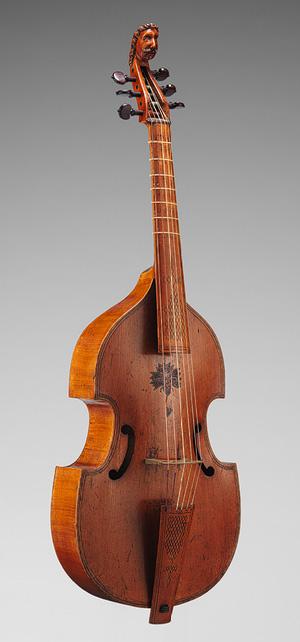
A website I have spent a lot of time on and really love is the Metropolitan Museum of Art, specifically the Heilbrunn Timeline of Art History with its pimpin' thematic essays and time lines. This fine online gallery offers today's gem of eighteenth-century musical instruments. I encourage clicking to learn more.


Viola da gamba (England, 1700)


Clavicord, Christian Kintzing (Germany, 1763)

Click here to see the London Symphony Orchestra do Handel's "Ev'ry valley shall be exalted," conducted by
Sir Colin Davis, with Mark Padmore (tenor), performed in Barbican Hall, London, 10 December 2006.


03 May 2010

18th Century Halifax


Some of the oldest buildings in Canada are here in Nova Scotia, bested only by Quebec, with homes and chapels dating to the 1600s (Maison des Jésuites-de-Sillery, for instance, from 1637). Few of them still stand, however. But, here in Nova Scotia, we have St. Paul's Church. Built in 1750, it was the first Anglican church in North America, and the oldest standing structure in Halifax.

Founded by the proclamation of George II, the church was designed in palladian style by James Gibbs, based on the design of St. Peter's Church in London (circa 1728). Some of the interior features include original pine and oak support beams brought in from Maine, a crypt containing the remains of 20 congregants, and two fonts, one presented by the Bishop of Newfoundland in the 17th century, and one from the 18th. The external timber was cut and shipped from Boston. It remains an attractive tourist site, located in Parade Square, and has an active congregation and service schedule. It survived the Halifax Explosion (1917). The founding of St. Paul's followed the founding of Halifax in 1749.

01 May 2010

Tapestry

French designer Frédérique Morrel brings vintage tapestries and needlework back to life. Très chic.

30 April 2010

Man: a Bubble to Himself


I just remembered a resource I found a few years ago relating to the
South Sea Bubble. The website is managed by the Baker Library at Harvard Business School, part of the Kress Collection, titled, Sunk in Lucre's Sordid Charms. Oh, it was sordid alright. The website is pretty cool. There is limited access, however, to documents and images, provided you are not a Harvard University student, but what is available is pretty neat.


The website offers a
brief history of the South Sea Company and the causes of the stock-job pop. There is also a very useful and bright essay by Christopher Reed ("The Damn'd South Sea") available on the website that is illuminated by contemporary documents and images, published in Harvard Magazine (June 1999). The website also marshals many German and Dutch woodcuts and renditions. The pop of the South Sea Bubble reverberated loudly in English history, preceded in kind only by the Mississippi Bubble of John Law.


12 April 2010

Thou art in debt!

Just working away at the connections between Laurence Sterne and Jane Austen. I had consulted the MLA Bibliography to see if this topic has ever been explored, and I found a chapter from Laurence Sterne: Riddles and Mysteries (1984) relating exactly to this topic, thus I wait. I'm waiting for the chapter to be delivered so I can read it. I wonder what the argument is (by Park Honan) regarding "Sterne and the Formation of Jane Austen's Talent." Aside from this, however, there is little connecting the two authors in scholarship (other than Honan, Celia A. Easton has done a little bit on this). Actually, there is little tangible history connecting these authors, as well. I searched for hours for any printed connection between Austen & Sterne (subscription lists, Rev. Austen's library books, book sales in Chawton, &c.) with little success.

UPDATE: The chapter by Honan was helpful, and drew some of the same conclusions as I had already drawn, but focused more on aligning Austen's earlier work (1790s writings) with Sterne's narrative tone. And, Honan made distinctions between Sterne's Whiggishness and Austen's Toryism. Helpful.


05 April 2010

And curse Sir Walter Raleigh

Sir Walter Raleigh (1552-1618)

Aristocrat, soldier, poet, courtier, importer of tobacco.

Total babe.

Blog Archive