
03 February 2011

20 October 2010
Strawberry Hill Online!


"It was built to please my own taste, and in some degree to realise my own visions" (Horace Walpole)
28 September 2010
Those damn'd Romantics
For me, I find it bizarre to call Austen "pre-Victorian" as much as I find it bizarre to call Thomas Warton, Oliver Goldsmith, or even Horace Walpole "pre-Romantic." If the "Romantic Century" begins in 1750, what do we make of Gray, Sterne, Boswell, Equiano, Burke, Barbauld? These writers are distinct from the project of Wordsworth and Coleridge, which has thus far been the place mark of Romanticism. I'm just not buying this whole thing. Certain preoccupations were brought to the writing table that are uniquely mid-century oriented. Yes, Gray is an early voice of the fascination with the morose, solitary, and (unknowingly) psychological, but to say he is a pre-Romantic takes him out of his context and hands him over to an era affected by Revolution, regency, industrial/scientific developments, and urbanite-occupations. Not the nostalgic, neo-classical, anxious, naive, and authorial culture to which he belongs. IF ANYTHING, we should call the Romantics post-Sensibility. If Burke's Sublime is the treatise of the era, especially in the Gothic mode, then perhaps the Romantics were looking back to mid-century to position themselves with a particular aesthetic and sociocultural agenda; Burke was not looking ahead to plain language, ghosts, and the women's right to write. Give me a break.

Sources:
Johnson, Claudia L. "The Novel and the Romantic Century, 1750-1850" European Romantic Review 1 (2000) 12-20.
Wolfson, Susan J. "50-50? Phone a Friend? Ask the Audience? Speculating on a Romantic Century, 1750-1850" European Romantic Review 1 (2000) 1-11.
23 September 2010
Printer of the Century

Today in 1764, Robert Dodsley - famed printer, miscellaneous writer - died in Durham. His well-known editions include Johnson's Rasselas, Gray's Elegy, and The Annual Register with Edmund Burke. He oversaw some of the publication of Tristram Shandy; he retired the same year (1759) and handed over his Tully's Head, Pall Mall shop to his brother James.
Portrait above: attributed to Edward Alcock, 1760 (NPG London).
Seen below is the frontispiece to Volume I of Tristram Shandy, complete with woodcut by Hogarth showing Trim reading the sermon, "The Abuses of Conscience Considered," to Uncle Toby and Walter. Trim's body follows Hogarth's "line of beauty" - the serpentine. This particular edition is a reprint from 1782, but clearly printed for "J.Dodsley" in London.

See: Solomon, Harry S. The Rise of Robert Dodsley (Carbondale: Southern Illinois University, 1996). Online.
20 September 2010
What a weirdo.

More on Strawberry Hill from the Twickenham Museum.
10 September 2010
Albert Moore
 A Quartet, A Painter's Tribute ... AD 1868
 Albert Joseph Moore was born in York in 1841, and died in London in 1893. A Quartet represents, as Elizabeth Prettejohn writes, the classical spirit of his art and the linear grid underplaying the scene: "the figures and objects alike take their places in obedience to the abstract pattern of the grid" (120). The golden hair of the woman on the right is balanced by the golden flower and golden sash on the left, for instance. The angles of the bows and the placement of the instruments also functions within Moore's linearity. To see a higher quality version of this image, please visit Peter Nahum @ The Leister Galleries.
10 August 2010
For Sale!
Don't miss this chance to enjoy rustic living in an intimate setting.

18 June 2010
Portraiture

26 May 2010
18th Century Society

I'm presenting an essay at the Canadian Society for Eighteenth Century Studies Annual Conference at Memorial University in Newfoundland this October. The essay is titled, "Sterne's Darling Maid: Charting the Influence of Laurence Sterne on Jane Austen". I went to the CSECS/NEASECS Conference in Ottawa last year, which was great, and I am very excited to attend this year's conference because Pat Rogers is scheduled to be a plenary speaker, who I met at BSECS 2008. He's worked on Sterne in the past. WATCH OUT NEWFOUNDLAND! Anyway, now I am revising, revising, revising the essay, which is good. I think people only listen in conferences about 60% of the time anyway; it's a lot to retain in a short time, plus some people are naturally boring.
16 May 2010
Life is too short to be long about the forms of it.
04 May 2010
Too Hot to Handel
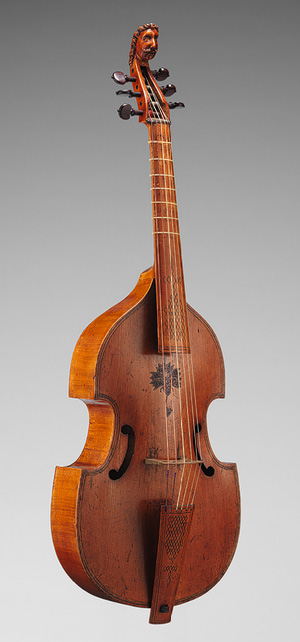 Viola da gamba (England, 1700)
  Clavicord, Christian Kintzing (Germany, 1763)
Click here to see the London Symphony Orchestra do Handel's "Ev'ry valley shall be exalted," conducted by
Sir Colin Davis, with Mark Padmore (tenor), performed in Barbican Hall, London, 10 December 2006.
03 May 2010
18th Century Halifax

01 May 2010



30 April 2010
Man: a Bubble to Himself

I just remembered a resource I found a few years ago relating to the South Sea Bubble. The website is managed by the Baker Library at Harvard Business School, part of the Kress Collection, titled, Sunk in Lucre's Sordid Charms. Oh, it was sordid alright. The website is pretty cool. There is limited access, however, to documents and images, provided you are not a Harvard University student, but what is available is pretty neat.

The website offers a brief history of the South Sea Company and the causes of the stock-job pop. There is also a very useful and bright essay by Christopher Reed ("The Damn'd South Sea") available on the website that is illuminated by contemporary documents and images, published in Harvard Magazine (June 1999). The website also marshals many German and Dutch woodcuts and renditions. The pop of the South Sea Bubble reverberated loudly in English history, preceded in kind only by the Mississippi Bubble of John Law.
12 April 2010
Thou art in debt!
UPDATE: The chapter by Honan was helpful, and drew some of the same conclusions as I had already drawn, but focused more on aligning Austen's earlier work (1790s writings) with Sterne's narrative tone. And, Honan made distinctions between Sterne's Whiggishness and Austen's Toryism. Helpful.
05 April 2010


17 March 2010
Literary Party

Having just studied a little work of Thomas Warton and Oliver Goldsmith, I thought it fitting to include this print (above), titled, A Literary Party at Sir Joshua Reynolds's, by Owen Bailey (1851). I love this print because of David Garrick's expression (and the recognizable likeness). Seated from left to right: biographer James Boswell (1740-1795), Samuel Johnson (1709-1784), portraitist and painter Sir Joshua Reynolds (1723-1792), theatre manager and actor David Garrick (1717-1779), philosopher and statesman Edmund Burke (1729-1797), Corsican patriot Pasquale Paoli (1725-1807), hoarder and music historian Charles Burney (1726-1814), Thomas Warton (1728-1790), and finally, novelist and poet Oliver Goldsmith (1728-1774).

15 March 2010
Paris, 1800

09 March 2010
9 March 1796

by François Pascal Simon Gérard (1808)
December 1795
I awake full of you. Your image and the memory of last night’s intoxicating pleasures has left no rest to my senses.
Sweet, incomparable Josephine, what a strange effect you have on my heart. Are you angry? Do I see you sad? Are you worried? My soul breaks with grief, and there is no rest for your lover; but how much the more when I yield to this passion that rules me and drink a burning flame from your lips and your heart? Oh! This night has shown me that your portrait is not you!
Meanwhile, my sweet love, a thousand kisses; but do not give me any, for they set my blood on fire.
Bonaparte.
08 March 2010
The Starling and The Mouse
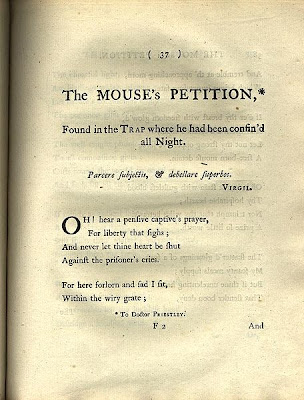
The ideas of natural freedom that Barbauld presents in her versed rhyme through the figure of the little trapped mouse, whose "guiltless blood" stains the "hospitable earth," was earlier presented by Laurence Sterne in A Sentimental Journey (1768). In the chapter, "The Hotel at Paris - The Passport," Yorick hears a little voice, which he took to be a child, crying:
... and looking up, I saw it was a starling hung in a little cage,
--'I can't get out--I can't get out'-- said the starling. I stood
looking at the bird: and to every person who came through
the passage it ran fluttering ... --'I can't get out,' said the starling.
--God, help thee! said I--but I'll let out, cost what it will.
The bird flew to the place where I was attempting his deliverance,
and thrusting his head through the trellis, pressed his breast
against it, as if impatient -- I fear, poor creature! said I,
I cannot set thee at liberty--'No,' said the starling,
--'I can't get out--I can't get out,' said the starling.
Disguise thyself as thou wilt, Slavery! said I--still thou art a bitter drought.

This episode of the starling, a bird coincedentally found on the Sterne coat of arms (above), needs little explanation, except I will point to the fact that Yorick was unable to open the cage. In 2007, Shandy Hall held an exhibit on Sterne's starling to commemorate the 200th year since the beginning of the end of slavery in the British Empire. The passage in ASJ got praise from "the extraordinary negro" Ignatius Sancho (who you can read more about here, written by specialist Brycchan Carey, who is very nice), and is alluded to in Volume I, Chapter X of Jane Austen's Mansfield Park (elaborated upon here). While there are plenty of arguments around the starling, and what it means in a Shandean context, I find that it is both an emblem of oppression and a catalyst for Yorick's sensibility, which takes the reader into a tormented and painful representation of feeling, Sterne, and his reader, almost bursting into tears of anguish, even though I still think Sterne is ribbing us, to some extent... but anyway, don't forget Barbauld's poor little mouse.